Britt Johnson
News of the WorldBritt Johnson appears chiefly through the concern his absence creates and the account of his death. The novel first leaves him somewhere on the road, a person Jefferson Kyle Kidd hopes to hear about; it later fixes his fate in 1871 and places his memory among the stories preserved across generations.
Identity and Place in the Narrative
The evidence identifies Johnson as a participant in freighting journeys through North Texas. It supplies little biographical detail, and he does not enter the cited scenes in person. Instead, he is present as someone whose whereabouts matter to Jefferson Kyle Kidd: news of Johnson is worth waiting for, but never arrives at the campsite.
This indirect introduction gives Johnson a distinct narrative weight. The journey’s dangers and interruptions are experienced by those on the road, while Johnson remains beyond their reach, known through the possibility of news and, ultimately, through the account of what happened to him.
The Search for News
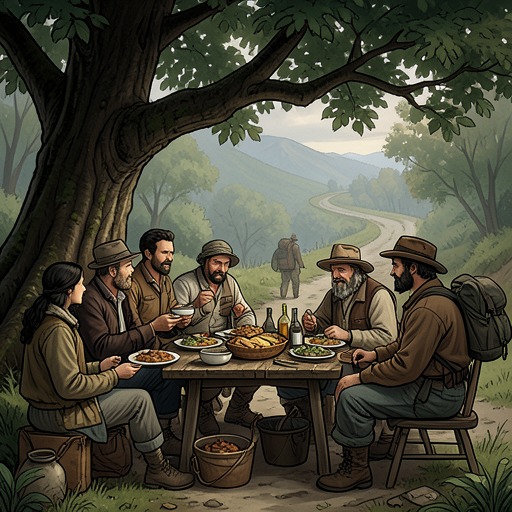
After leaving Durand, Jefferson Kyle Kidd and his party travel along the Lampasas Road and spend a night on the Leon River near Cranfills Gap. The campsite bears signs of earlier freight traffic—deep, narrow tire tracks, bare ground, and a dead campfire. Kidd hopes a convoy will arrive so he can ask about Johnson, but no wagons come. The horses must make do with grass already nearly eaten down by freighters’ teams.
The unanswered wait is a small but telling measure of the journey’s isolation: the tracks record movement through the country, yet they cannot bring word of the people who have passed along it. Johnson’s name enters the scene as a practical concern, not as an explanation of his fate; at this point Kidd is still seeking information.
Death and Remembrance
The later account establishes that in 1871 Johnson, Paint Crawford, and Dennis Cureton were killed by Comanche while on a freighting trip near Graham in North Texas. They were caught on the only open stretch between Graham and Indian Mound Mountain. They were buried where they fell, and their gravestone still stands there.
Johnson’s death also enters the novel’s larger record of lives carried forward in stories. The Kiowa warriors’ lives, their bravery and daring, and the deaths of Johnson and his companions are described as surviving in tales told and retold. That remembrance does not undo the violence or turn Johnson into a participant in scenes he never appears in; it makes his fate part of the book’s account of a contested Texas landscape, where people and their histories persist in both graves and storytelling.